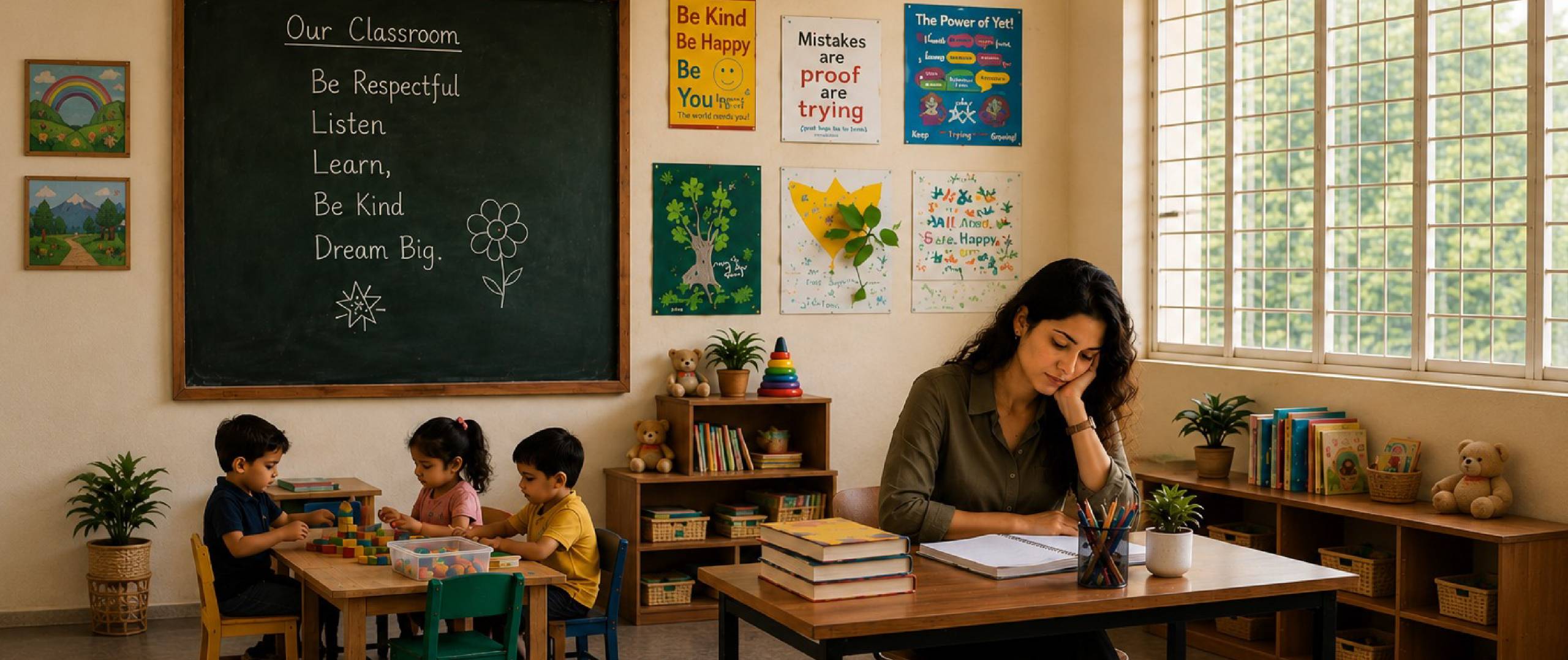
Teaching on Autopilot: The Silent Struggle Many Educators Faces
“Have you ever looked around your classroom and thought: I know how to do this job… but I don’t feel excited by it anymore?”
Many educators reach this stage after years in teaching.
- The classroom runs smoothly.
- The lessons are planned.
- The children are learning.
- Feedback is positive.
But internally, something feels missing.
- Teaching starts feeling repetitive.
- Growth feels slow.
- Workshops feel generic.
- Every academic year starts looking the same.
And slowly, many teachers begin questioning themselves:
- Am I still growing professionally?
- Is this all my career will be?
- Why do I feel stuck even though I’m experienced?
- How do I sustain my passion for teaching long-term?
This is more common than most people admit. Because in education, teachers are often encouraged to keep going but rarely encouraged to pause and reflect on whether they themselves still feel inspired, challenged, or fulfilled. And the truth is: Many teachers are not tired of children. They are tired of functioning on autopilot.
The Real Problem Is Not Lack of Passion
Most educators entered teaching because they genuinely cared.
They loved:
- Working with children,
- Creating meaningful learning experiences,
- Making a difference,
- Being creative,
- Helping children grow.
But over time, many educators become stuck in survival mode. The focus shifts to:
- Deadlines,
- Paperwork,
- Routines,
- Assessments,
- Parent expectations,
- Managing behaviour,
- And constantly “getting through the day.”
When this continues for years without meaningful growth, reflection, or stimulation, teaching can start feeling emotionally flat. Not because teachers are bad at their jobs. But because human beings need growth to stay engaged. The same way children need new experiences to stay curious, educators need opportunities to evolve too.
Why This Needs To Be Addressed
When educators feel disconnected, it affects more than motivation. It impacts:
- Creativity,
- Confidence,
- Energy,
- Classroom presence,
- Relationships with children,
- And long-term career satisfaction.
Many teachers begin doubting themselves unnecessarily when the real issue is simply that they have outgrown old ways of working. Experienced educators do not just need appreciation. They need:
- Intellectual stimulation,
- Reflective spaces,
- Meaningful professional conversations,
- Opportunities to explore new ideas,
- And permission to evolve.
Because sustainable passion in education does not happen automatically. It has to be intentionally maintained.
So What Can Teachers Do To Sustain Their Passion?
1. Stop Operating Only from Routine
Experience is valuable. But routine without reflection can quickly become stagnant. If every year feels identical, it may be time to intentionally change something. Try:
- Introducing a new teaching approach,
- Redesigning classroom experiences,
- Experimenting with more child-led learning,
- Changing how you observe and document learning,
- Collaborating with different educators,
- Or exploring areas of education you have never deeply engaged with before
- Teach a new grade level, not necessarily one that is higher, but even one that is younger. The purpose is to develop a deeper understanding of different developmental stages and how children learn at different ages.
Growth often begins with small shifts.
2. Invest in Learning That Actually Challenges You
Sometimes educators attend training sessions but return unchanged because the learning was passive or disconnected from real practice. Seek spaces that:
- Make you think deeply,
- Encourage reflection,
- Challenge old beliefs,
- Introduce fresh perspectives,
- And help you reconnect with why you entered education in the first place.
The educators who sustain passion long-term are usually the ones who remain learners themselves.
3. Reflect Beyond “What Went Wrong?”
Many teachers reflect only when there is a problem. But meaningful reflection should also include:
- What energises me?
- What parts of teaching do I still enjoy most?
- What kind of educator do I want to become next?
- What areas do I want to grow in now?
Sometimes teachers feel stuck because they are still trying to fit into an old version of themselves professionally. Growth requires self-awareness.
3. Reflect Beyond “What Went Wrong?”
Many teachers reflect only when there is a problem. But meaningful reflection should also include:
- What energises me?
- What parts of teaching do I still enjoy most?
- What kind of educator do I want to become next?
- What areas do I want to grow in now?
Sometimes teachers feel stuck because they are still trying to fit into an old version of themselves professionally. Growth requires self-awareness.
4. Build Connections With Other Reflective Educators
Teaching can become isolating, especially when educators feel they cannot openly talk about feeling uninspired. One of the fastest ways to regain motivation is to be around educators who:
- share ideas openly,
- discuss challenges honestly,
- think deeply about practice,
- and actively want to grow.
The right professional community can completely change how a teacher experiences their work again. Because growth is easier when educators do not feel alone in the process.
5. Allow Yourself To Evolve
This is important:
You do not need to stay the exact same kind of teacher forever. As educators gain experience, many naturally begin wanting more:
- Leadership,
- Mentoring,
- Specialised learning,
- Training,
- Curriculum design,
- Advocacy,
- Research,
- Innovation,
- Or a deeper understanding of child development.
Feeling restless is not always a sign that teaching is wrong for you. Sometimes it is a sign that you are ready for your next stage of growth.
At the same time, many teachers wait for someone else to notice their potential or invite them to grow. They wait to be chosen, promoted, or encouraged before taking the next step. But growth often begins when teachers take initiative themselves — by learning something new, volunteering for responsibilities, asking questions, exploring different age groups, or stepping outside their comfort zone.
No one else can fully build your journey for you. The educators who continue growing are usually the ones who remain curious, open, reflective, and willing to evolve.
A Final Thought
Many educators think sustaining passion means staying constantly motivated. It doesn’t. Sustaining passion is about continuing to grow. The teachers who stay inspired over decades are not the ones who never feel tired or stuck.
They are the ones who:
- Reflect,
- Stay curious,
- Seek new perspectives,
- Allow themselves to evolve,
- And reconnect with purpose repeatedly throughout their journey.
Because teaching was never meant to be static. And educators were never meant to stop growing either. If this resonated with you, and you’ve been feeling stuck, uninspired, or unsure of your next step as an educator, reach out to us at Kai Circle. Sometimes one meaningful conversation can be the beginning of renewed purpose and growth.